
< img height="1" width="1" style="display:none" src="https://www.facebook.com/tr?id=622714978388555&ev=PageView&noscript=1" />

Author - ensolladmin

The Physics and Materials Science Behind the Diamond Wire Loop: A Comprehensive Guide

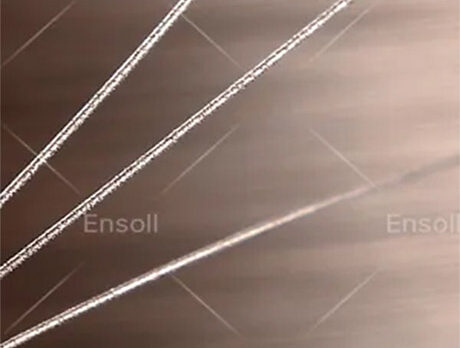
For decades, the manufacturing sector relied on heavy mechanical blades, abrasive slurries, and high-powered lasers to section industrial materials. However, as modern engineering pushes the boundaries of material science—introducing ultra-hard substrates like Silicon Carbide ($SiC$), gallium nitride ($GaN$), and specialized aerospace matrix composites—traditional separation techniques have hit a physical wall.   To overcome these limitations, engineers developed the diamond wire loop. This educational guide explores the underlying physics, material composition, and mechanical principles that make this continuous abrasive consumable the premier [...]
Slicing SmCo Magnets with Precision: The Power of Endless Diamond Wire Loops in High-Temperature Optics

As modern aerospace, defense, and high-performance automotive industries push the boundaries of operational limits, the demand for components that can withstand extreme environments is soaring. While Neodymium (NdFeB) magnets dominate the general electric vehicle market, they have a critical vulnerability: they lose their magnetic strength at high temperatures.   For environments exceeding 150°C, engineers turn to a far more resilient superhero of the magnetic world: Samarium Cobalt (SmCo).   SmCo permanent magnets offer exceptional thermal stability (operating at temperatures up to 350°C) and [...]

Tech Insights: Maximizing Efficiency with Endless Diamond Wire Loops

As global manufacturing demands higher precision and lower material waste, traditional slicing methods are hitting their limits. Below, we answer the most critical operational and commercial questions about upgrading to Endless Diamond Wire Loop technology.   1. Production Efficiency & ROI   Q1: Why is an endless diamond wire loop considered faster than alternative cutting methods?   A: Traditional wire saws rely on a reciprocating (back-and-forth) motion. This means the wire must constantly decelerate, stop, and accelerate in the opposite direction, creating a massive bottleneck [...]

What Is Ferrite Core? Types, Manufacturing, Cost & Diamond Wire Loop Cutting

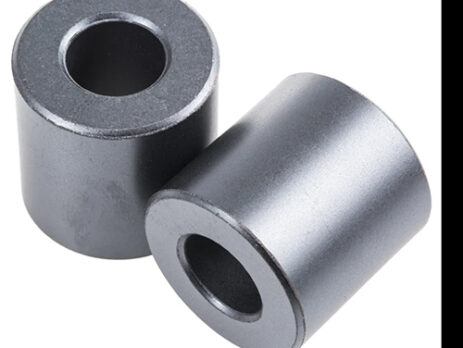
Ferrite cores are everywhere. They are inside the chargers that power your phone, the motors that drive your electric vehicle, and the speakers that play your favorite music. Despite their widespread use, many people do not know what ferrite cores are or why they require such careful manufacturing.   In this guide, we will answer five key questions: What is a ferrite core? What types exist? How are they made? Why are they expensive? And most importantly, how can diamond wire [...]

Why Diamond Wire Loop is the Only Way to Cut Aluminum Foam (Metal Foam)

If you have ever tried to cut aluminum foam using conventional methods like band saws or milling, you probably ended up with a mess. The material tears, the cutting tool clogs, and the unique porous structure—which gives the metal its value—gets destroyed.   Enter the Diamond Wire Loop. This is not your standard wire EDM or reciprocating wire saw. For modern engineers and fabricators working with “aluminum with foam” (commonly known as metal foam or foamed aluminum), the endless diamond wire [...]

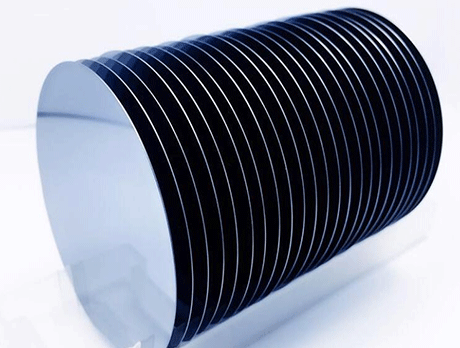
semiconductor silicon wafer

Fab Wafer: From Crystal to Chip

Introduction: The Unsung Hero of the Digital Age Every time you send a text message, stream a video, or start your car, you are relying on something so small that millions of them can fit on a single fingertip. That something is the integrated circuit, and its foundation is the fab wafer.   The term “fab wafer” combines two essential concepts in semiconductor manufacturing. “Fab” is short for fabrication facility—the ultra-clean factory where chips are born. “Wafer” refers to the thin, disk-shaped [...]

Ensoll Upgrades: Stronger Wire Production, Faster Delivery

Dear Valued Customers and Partners, Thank you for your continued support and trust. Due to business expansion, our wire production and operations center has officially relocated to a new facility. The new site is a 5-floor integrated building, featuring: Two dedicated wire production workshops R&D laboratory Testing & application laboratory Operations and technical support center This upgrade will significantly enhance our: Product consistency and quality control R&D and application support capabilities Delivery efficiency and customer response speed Important Notice Our equipment manufacturing facility remains unchanged This relocation will not affect ongoing orders or [...]

Inside the Fab Wafer: How Raw Crystals Become the Engines of Modern Electronics

Introduction: The Silent Foundation of Everything Electronic Every computer processor, every memory chip, every sensor in your smartphone, and every power management circuit in your electric vehicle starts as something surprisingly simple: a fab wafer.   The term “fab wafer” combines two ideas. “Fab” is short for fabrication facility—the highly controlled cleanroom where semiconductors are made. “Wafer” refers to the thin, disk-shaped slice of material that serves as the substrate for integrated circuits.   But before a wafer ever enters a fab, it must [...]

The Silent Heartbeat of Accuracy: Name a Use of Quartz in Precision Instruments

  Introduction: The Hidden Hero of High-Accuracy Tools If you work with measurement, test equipment, or laboratory instrumentation, you have almost certainly benefited from quartz. But if someone asked you to name a use of quartz in precision instruments, would you have a clear, confident answer?   Most people think of quartz watches. That is correct, but it is only the beginning.   Quartz appears inside spectrum analyzers, frequency counters, GPS receivers, temperature standards, and even optical measurement systems. It provides timing, stability, and transparency—three [...]

Process Stability and Surface Integrity in Diamond Wire Sawing of Ferrite

Ferrite permanent magnets — particularly strontium ferrite (SrFe₁₂O₁₉) and barium ferrite (BaFe₁₂O₁₉) — are widely used in automotive sensors, loudspeakers, micro-motors, and household appliances. Their high electrical resistivity, low eddy current loss, and excellent corrosion resistance make them attractive for mass production. However, ferrite is also a hard and brittle ceramic material. Machining it into precise shapes, especially thin slices or complex profiles, presents well‑known difficulties: edge chipping, subsurface cracking, and low yield.   Among the few methods capable of producing [...]