Why Diamond Wire Loop is the Only Way to Cut Aluminum Foam (Metal Foam)
If you have ever tried to cut aluminum foam using conventional methods like band saws or milling, you probably ended up with a mess. The material tears, the cutting tool clogs, and the unique porous structure—which gives the metal its value—gets destroyed.
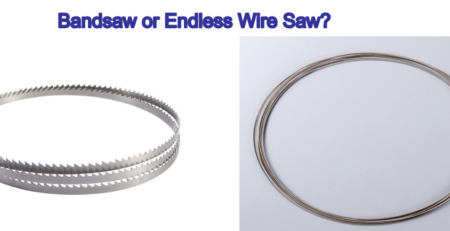
Enter the Diamond Wire Loop. This is not your standard wire EDM or reciprocating wire saw. For modern engineers and fabricators working with “aluminum with foam” (commonly known as metal foam or foamed aluminum), the endless diamond wire loop is the gold standard for sample preparation and production cutting.
Here is everything you need to know about why this combination works so well.
The Challenge of Cutting “Aluminum with Foam”
Aluminum foam is essentially a metallic sponge. It is rigid, but its walls are thin. Traditional cutting tools apply too much force, crushing the cells on the edge of the cut. This creates a dense, solid rim that ruins the lightweight properties of the material.
You need a cutting method that offers:
- Extremely low cutting force.
- No vibration or impact.
- A narrow kerf to minimize waste.
What is a Diamond Wire Loop?
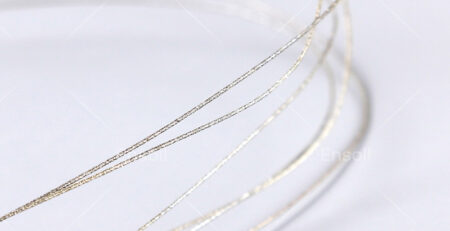
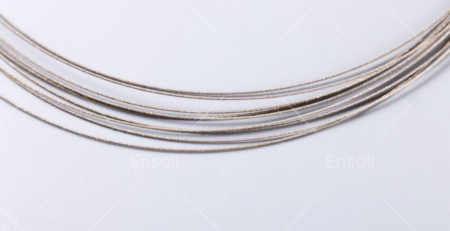
Unlike traditional wire cutting machines that spool thousands of meters of wire back and forth (reciprocating), the diamond wire loop is an endless, continuous loop . It is typically less than 10 meters long and moves in a single, high-speed direction (often exceeding 4mm/min).
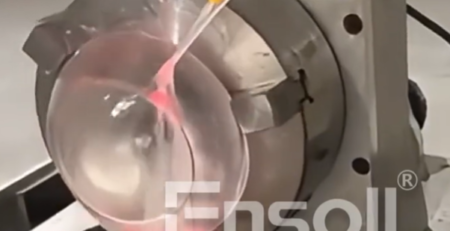
The wire is electroplated or impregnated with industrial diamond grit. As the loop spins, the diamonds grind through the material rather than tearing it .
The 3 Major Benefits for Aluminum Foam
1. The “No Crush” Factor
The most significant advantage is the reduction of the kerf loss and surface damage. Because the diamond wire loop uses a high linear speed but low single-point pressure, it cuts through the cell walls of the foam without collapsing the adjacent cells. You get a clean, open surface structure that looks exactly like the core of the material .
2. Dry Cutting Capability
Aluminum foam is often used for high-temperature and lightweight structural applications, but it can be gummy to cut. Many diamond wire loop setups allow for dry cutting or minimal coolant . Because the wire is thin (diameters can be as low as 0.3mm to 0.6mm), there is very little friction heat generated. This means no messy coolants to clean out of the porous foam cavities.
3. Superior Surface Finish
Forget about burrs. When you cut aluminum with foam using a diamond wire loop, the resulting surface is smooth and flat. In tests cutting similar materials like foam cement or PMI foam, results have shown “no wire marks” and a “mirror finish” on the cut walls . For aluminum foam, this means the part is ready for bonding or inspection immediately.
Applications in the Real World
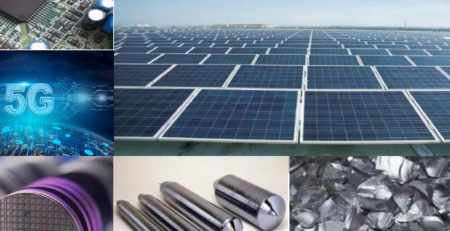
While cutting silicon and sapphire is the most common job for diamond wire loops, manufacturers are increasingly using this technology to process PMI foam and aluminum foam for the aerospace and automotive industries . Whether you are cutting large blocks into thin plates for battery thermal management or trimming core samples for quality control, the diamond wire loop delivers consistency that mechanical saws cannot match.
- Aerospace & Defense: Lightweight Core Cutting
In aerospace engineering, aluminum foam is used as the core material for sandwich panels in wing leading edges and fuselage floors. The challenge is cutting complex geometries without introducing stress fractures.
– How the Diamond Wire Loop helps: The continuous loop allows for wire guiding changes, enabling curved cuts (profile cutting) inside the foam block. Because there is no vibration, the integrity of the bonding interface between the foam and the solid skin remains intact. This reduces scrap rates from 30% (using band saws) to nearly zero.
- Automotive Crash Boxes & Battery Trays
EV manufacturers use aluminum foam in crash boxes because it absorbs energy like a plastic straw but returns force like a spring. However, when cutting these parts to size for specific vehicles (sedan vs. SUV), traditional saws compress the foam, ruining its calibrated crush strength.
– Real-world workflow: Factories are now using multi-wire loop saws (several loops running in parallel) to slice one large foamed aluminum block into 50 thin sheets simultaneously. This is impossible with reciprocating wire or EDM. The result is a perfectly open-pore surface that allows battery cooling air to flow through the material without blockage.
- Medical Implants (Porous Tantalum/Aluminum Mimics)
While not pure aluminum, the technique for “aluminum with foam” is identical to the processing of metallic foam for spinal implants. Medical device manufacturers require absolutely zero loose grit or contamination.
– The advantage: Unlike abrasive waterjets that embed sand into the foam pores, the diamond wire loop uses a fixed diamond grit. When cutting biocompatible metal foams, the wire produces a clean surface that requires only a simple ultrasonic wash before anodizing or coating.
- Acoustic Panels for High-Speed Rail
Aluminum foam is widely used in train cabins to absorb noise. The panels must be cut to precise millimeter tolerances to fit into curved ceiling arches.
– Why it works: The small kerf width (approx. 0.4mm) of the diamond wire loop means that valuable acoustic material is not turned into dust. Furthermore, the wire life is exceptionally long—a single diamond loop can cut over 5,000 linear meters of foam before needing replacement, making it far more economical than disposable blades.
- Research & Development (University Labs)
Material scientists studying the cell structure of “aluminum with foam” need to section samples without smearing the metal across the pores.
– The result: Scanning Electron Microscope (SEM) samples cut by diamond wire loop show no plastic deformation. The grains of the aluminum remain visible and undistorted, allowing researchers to accurately measure strut thickness and pore distribution.
Conclusion
If you are struggling with standard machining methods for aluminum with foam, it is time to switch to a diamond wire loop. It offers the precision of a laser but with no heat-affected zone, and the finish of a grinder but with no surface tearing. It is the ultimate tool for cutting the materials of the future.