The Silent Heartbeat of Accuracy: Name a Use of Quartz in Precision Instruments
Introduction: The Hidden Hero of High-Accuracy Tools
If you work with measurement, test equipment, or laboratory instrumentation, you have almost certainly benefited from quartz. But if someone asked you to name a use of quartz in precision instruments, would you have a clear, confident answer?
Most people think of quartz watches. That is correct, but it is only the beginning.
Quartz appears inside spectrum analyzers, frequency counters, GPS receivers, temperature standards, and even optical measurement systems. It provides timing, stability, and transparency—three things that precision instruments cannot live without.
However, there is an important step before quartz becomes useful: cutting and shaping it without introducing cracks or internal stress. That is where modern manufacturing technology—specifically the diamond wire saw—plays a critical role.
In this article, we will first answer the core question by naming the most important use of quartz in precision instruments. Then, we will explain why diamond wire saw technology has become the preferred method for preparing quartz components.
The Primary Answer: Frequency Control and Timing
When experts name a use of quartz in precision instruments, the number one answer is frequency control.
Quartz is a piezoelectric material. This means that when you apply an electric voltage to a quartz crystal, it changes shape. When it changes shape, it generates a voltage. This two-way effect allows quartz to resonate at a very precise natural frequency.
A small piece of quartz, cut into a specific shape and orientation, can vibrate thousands or even millions of times per second. These vibrations are incredibly stable—far more stable than LC circuits or RC oscillators.
Where This Is Used
– Signal generators use quartz oscillators to create accurate reference frequencies.
– Frequency counters rely on quartz to measure unknown signals correctly.
– GPS receivers use quartz to maintain timing between satellite updates.
– Spectrum analyzers need stable local oscillators, which quartz provides.
– Digital oscilloscopes use quartz for time-base accuracy.
Without quartz, most electronic test and measurement instruments would drift significantly. Measurements would become unreliable. In short: quartz makes precision possible.
Why Quartz Is Uniquely Suited
No other material combines the following:
– Strong piezoelectric effect
– Low temperature sensitivity (with proper crystal cuts)
– Long-term aging measured in parts per million per year
– Mechanical robustness for industrial assembly
This is why, even in an age of atomic clocks and chip-scale MEMS oscillators, quartz remains the practical choice for the majority of precision instruments.
Supporting Uses: Temperature and Optical Applications
While frequency control is the most famous answer, there are other legitimate uses when you
Quartz as a Temperature Sensor
Some precision thermometers use a quartz resonator as the sensing element. As temperature changes, the resonant frequency of quartz shifts in a very predictable way. By measuring this frequency shift, the instrument calculates temperature with millikelvin resolution.
These quartz thermometers are found in:
– Calibration laboratories
– Oceanographic research equipment
– Semiconductor processing tools
They offer better long-term stability than thermocouples and faster response than some platinum resistance thermometers.
Quartz in Optical Precision Instruments
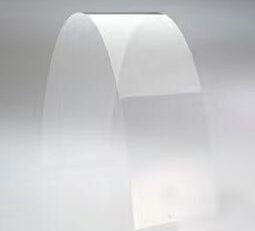
Quartz is also valued for its optical properties. Fused quartz transmits light from deep ultraviolet (UV) to near infrared (IR). Ordinary glass blocks UV light, but quartz does not.
This makes quartz essential for:
– UV-Vis spectrophotometers
– Fluorescence measurement systems
– High-precision interferometers
In these instruments, quartz is used for lenses, windows, and cuvettes. The material does not fluoresce under UV light, which preserves signal clarity in sensitive measurements.
The Manufacturing Challenge: Cutting Quartz Without Damage
At this point, we have answered the main question: name a use of quartz in precision instruments—frequency control, temperature sensing, and optical components.
But there is a practical problem that engineers rarely discuss: quartz is hard, brittle, and sensitive to cracking.
If you cut quartz with a conventional abrasive saw or a fixed diamond blade, you often create:
– Microfractures along the cut edge
– Subsurface damage that weakens the component
– Heat-affected zones that change local material properties
For a precision instrument, any internal stress or microcrack is unacceptable. A quartz oscillator with internal stress will drift. A quartz optical window with subsurface damage will scatter light. A quartz thermometer element with microfractures will give inconsistent readings.
This is where diamond wire saw technology enters the picture.
How Diamond Wire Saw Solves the Quartz Cutting Problem
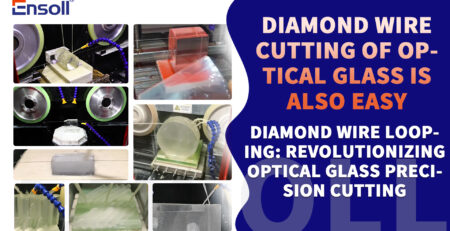
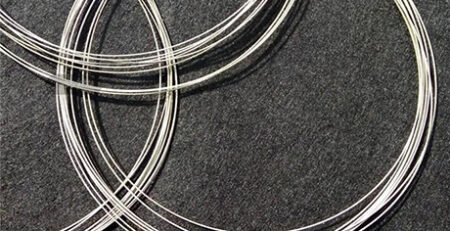
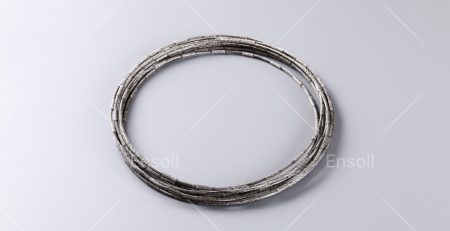
A diamond wire saw is a cutting tool that consists of a thin steel wire coated with diamond abrasive particles. The wire moves continuously in a single direction, creating a smooth, controlled cutting action.
Unlike a circular saw blade, which pushes material sideways, a diamond wire saw gently erodes the cut zone. This is critical for quartz.
Key Advantages for Quartz Processing
- Minimal material waste (narrow kerf)
The diamond wire saw has a very thin profile. The width of the cut—called kerf—is much smaller than that of a blade. For expensive quartz crystals or large fused quartz blanks, this waste reduction directly saves cost.
- Low mechanical stress on the workpiece
Because the wire is flexible and moves continuously, it does not forcefully push the quartz apart. Instead, it allows the diamond abrasive to do the work. This greatly reduces the risk of cracking or chipping.
- Cooler cutting (thermal stability)
Conventional saws generate significant friction heat. Quartz does not handle thermal shock well. A diamond wire saw, especially when used with a water-based coolant, keeps the quartz at a stable temperature throughout the cut.
- Clean and smooth cut surfaces
A diamond wire saw produces a surface that requires less post-processing. For a quartz oscillator blank or an optical window, this means fewer lapping and polishing steps.
- Ability to cut complex shapes
Precision instruments sometimes require quartz components that are not simple rectangles or circles. A diamond wire saw can cut curves, stepped profiles, and internal features by threading the wire through a pilot hole.
A Complete Manufacturing Flow
Let us connect the two parts of this story: quartz use in precision instruments and diamond wire saw processing.
A typical manufacturing process looks like this:
- Quartz material preparation – A synthetic quartz crystal or fused quartz blank is selected.
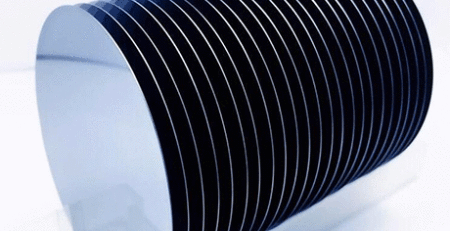
- Slicing with diamond wire saw – The diamond wire saw cuts the quartz into wafers, bars, or custom shapes without introducing cracks.
- Finishing – The cut quartz is lapped, polished, and cleaned.
- Electrode deposition (for oscillators) – Metal electrodes are added to create a resonator.
- Assembly into the instrument – The finished quartz component is installed into a frequency standard, thermometer, or optical system.
Without step two—the diamond wire saw—many quartz components would suffer from hidden damage that only appears after months of use in the field.
Real-World Example: Quartz Oscillator Production
Consider a manufacturer of high-stability quartz oscillators for telecommunications test equipment. They receive large synthetic quartz crystals. These crystals must be cut into thin wafers, then further cut into individual resonator blanks.
If the manufacturer uses an abrasive slurry saw, they face slow cutting speeds, thick kerf loss, and occasional wafer breakage. If they use a fixed diamond blade, they risk thermal damage.
By switching to a diamond wire saw, they achieve:
– More usable blanks per crystal (less kerf loss)
– Fewer cracked blanks (lower stress)
– Consistent surface quality (reduced finishing time)
The result is a better quartz resonator at a lower cost per unit.
Conclusion: Two Answers in One
If someone asks you to name a use of quartz in precision instruments, the clearest answer is still frequency control—the quartz oscillator and resonator that provides stable timing for test equipment, communications, and navigation systems. You can also mention temperature sensing and optical components as strong secondary uses.
But now you have a deeper answer. You know that before quartz can serve any of these precision roles, it must be shaped correctly. And one of the most reliable tools for shaping quartz is the diamond wire saw.
A diamond wire saw cuts quartz cleanly, with minimal waste, low mechanical stress, and good surface quality. It helps manufacturers turn raw quartz into reliable components that perform for years inside precision instruments.