What Is Ferrite Core? Types, Manufacturing, Cost & Diamond Wire Loop Cutting
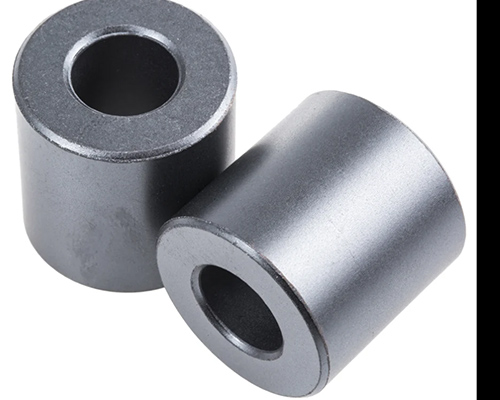
Ferrite cores are everywhere. They are inside the chargers that power your phone, the motors that drive your electric vehicle, and the speakers that play your favorite music. Despite their widespread use, many people do not know what ferrite cores are or why they require such careful manufacturing.
In this guide, we will answer five key questions: What is a ferrite core? What types exist? How are they made? Why are they expensive? And most importantly, how can diamond wire loop technology reduce waste during cutting?
Ferrite cores are classified into two main categories:
– Soft Ferrite: Easily magnetized and demagnetized. Used in transformers, inductors, and EMI filters.
– Hard Ferrite (Permanent Magnet): Retains magnetism after magnetization. Used in motors, speakers, and magnetic separators.
2. What Materials Are Called Ferrite Cores?
Not all ferrites are the same. Different compositions deliver different magnetic properties. Here are the three most common types:
Manganese-Zinc (MnZn) Ferrite
MnZn ferrite is the most widely used soft ferrite. It offers high permeability and high saturation flux density, making it ideal for:
– Power transformers
– Inductors
– Common-mode chokes
Nickel-Zinc (NiZn) Ferrite
NiZn ferrite has high electrical resistivity, making it suitable for high-frequency applications (1 MHz to 100 MHz). Common uses include:
– High-frequency transformers
– RF coils
– EMI suppression components
Hard Ferrite (Ceramic Magnet)
Hard ferrite, also known as permanent magnet ferrite, is composed of iron oxide and either barium or strontium. It is inexpensive and highly resistant to demagnetization. Applications include:
– DC motors
– Loudspeaker magnets
– Refrigerator door seals
3. How Are Ferrite Cores Manufactured?
he manufacturing process for ferrite cores involves several precise steps:
Step 1: Powder Preparation
Raw materials (iron oxide, manganese oxide, zinc oxide, etc.) are mixed in precise proportions. The mixture is then heated to around 1000°C in a process called calcination. This creates a ferrite powder with the desired crystalline structure.
Step 2: Milling
The calcined powder is ball-milled into a very fine powder, typically with particle sizes of just a few microns. This ensures uniform properties in the final product.
Step 3: Pressing
The fine powder is mixed with a binder and pressed into a mold under high pressure. The shape of the pressed part is called a “green” core. Common shapes include E-cores, U-cores, toroids, and custom geometries.
Step 4: Sintering
The green cores are heated to approximately 1300–1400°C in a controlled atmosphere furnace. During sintering, the particles fuse together, creating a dense, hard ceramic body with the desired magnetic properties.
Step 5: Machining (Cutting and Grinding)
Sintered ferrite cores often require additional machining to achieve final dimensions, flat surfaces, or special shapes. This is where diamond wire loop cutting becomes essential.
4. Why Are Ferrite Cores So Expensive?
Despite their simple appearance, ferrite cores command relatively high prices. Here is why:
High-Purity Raw Materials
The magnetic performance of a ferrite core depends directly on the purity of its ingredients. Even trace contaminants can degrade permeability, increase losses, or cause inconsistent performance.
Energy-Intensive Sintering
Sintering ferrite cores requires high temperatures (1300–1400°C) maintained for several hours. This consumes significant energy, contributing directly to manufacturing cost.
Difficult Post-Processing
Sintered ferrite is extremely hard (5–7 on the Mohs scale) and very brittle. Traditional cutting methods often cause edge chipping, cracking, or subsurface damage. Low yields mean higher cost per good part.
Tight Tolerances
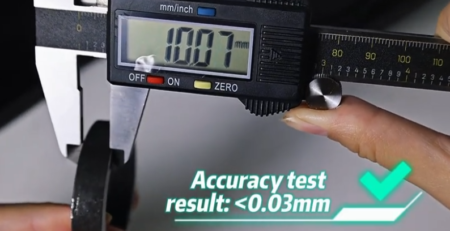
Modern electronics demand ferrite cores with precise dimensions. Achieving tolerances of ±0.05 mm or better requires advanced machining equipment and skilled operators.
5. How to Machine Ferrite Cores with Minimal Waste (Diamond Wire Loop)
This is the most critical question for manufacturers. Ferrite is hard and brittle—two properties that make cutting difficult. Traditional methods such as abrasive wheels or laser cutters often cause chipping, heat damage, or excessive material loss.
The Solution: Diamond Wire Loop Cutting
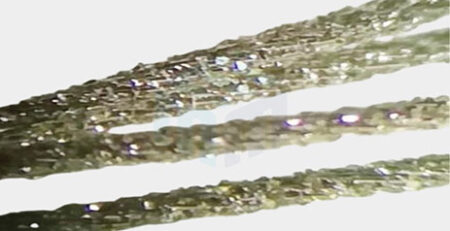
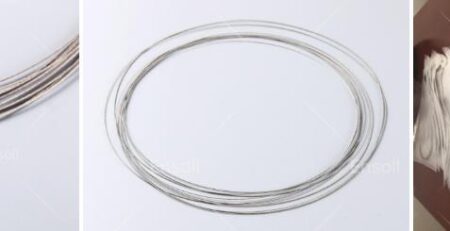
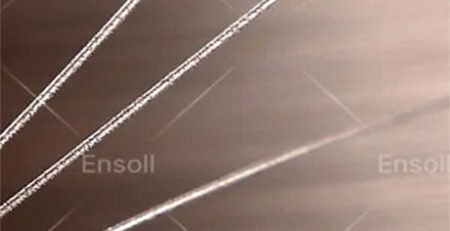
A diamond wire loop is a continuous steel wire electroplated with industrial diamond grit. The wire rotates in a single direction at high speed (4mm/min), grinding through ferrite like a precision saw.
Why Diamond Wire Loop Is Ideal for Ferrite
| Advantage | Benefit |
| Zero edge chipping | The grinding action distributes stress evenly, eliminating cracks and edge damage |
| Thin kerf (0.2–0.6 mm) | Less material removed means more parts from the same block |
| No heat damage | Minimal friction and continuous coolant keep the ferrite cool |
| Smooth surface finish (Ra 0.4–1.6 µm) | Reduces or eliminates post-cutting grinding |
| Ability to cut complex shapes | CNC-controlled diamond wire loops cut circles, arcs, and custom contours |
Tips for Maximum Waste Reduction
– Select the right wire diameter – 0.4 mm for general cutting; 0.2 mm for thin or delicate cores
– Optimize feed rate – Too fast causes chipping; too slow wastes time without improving quality
– Use clean coolant – Deionized water prevents contamination and ensures smooth cuts
– Inspect wire regularly – Replace the diamond wire loop when cutting speed drops significantly
Conclusion
Ferrite cores are essential components in modern electronics, from power supplies to electric vehicles. They are made through a precise, energy-intensive process involving powder preparation, pressing, and high-temperature sintering. Their cost reflects the quality of raw materials, manufacturing complexity, and the difficulty of post-processing.
However, the challenge of cutting hard, brittle ferrite has a proven solution: diamond wire loop technology. By delivering zero chipping, minimal kerf width, and excellent surface finish, diamond wire loops maximize material utilization and minimize waste—directly improving profitability for manufacturers.
Whether you are cutting MnZn transformer cores, NiZn EMI suppressors, or hard ferrite magnets, a diamond wire loop saw is the right tool for the job.