
Can You Laser Cut Magnet Material? Choosing Between Laser Cutting and Diamond Wire Loop
Magnetic materials are essential components in motors, sensors, electronics, and industrial applications. When machining these materials, manufacturers often face a critical question: Can you laser cut magnet material?
The answer depends on the type of magnet and desired precision. While laser cutting works for some magnetic metals, hard and brittle magnets (like neodymium or ferrite) often require diamond wire loop cutting to avoid cracking, heat damage, or demagnetization.
This guide explores:
– When laser cutting is suitable for magnets
– Why diamond wire cutting is better for certain materials
– Best practices for each method
1. Can You Laser Cut Magnet Material?
Laser Cutting Works for Some Magnetic Metals
Laser cutting uses a high-energy beam to melt or vaporize material, making it ideal for:
✔ Thin electrical steels (e.g., silicon steel for transformers)
✔ Nickel alloys (e.g., Permalloy for magnetic shielding)
✔ Some soft magnetic composites
Advantages of Laser Cutting:
✅ High precision (±0.1mm)
✅ Fast processing for thin sheets
✅ Minimal mechanical stress
Limitations:
❌ Heat-affected zone (HAZ) can alter magnetic properties
❌ Not ideal for hard/brittle magnets (risk of cracking)
❌ Reflective metals (like some alloys) may require special lasers
2. When is Diamond Wire Loop Cutting Better?
Best for Hard & Brittle Magnets
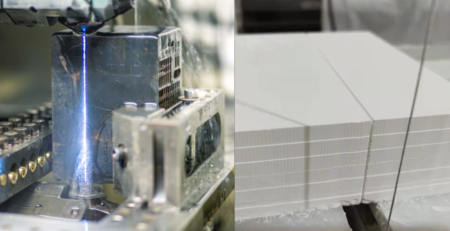
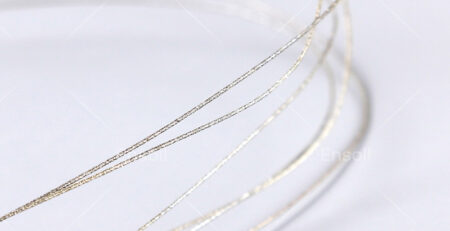
Diamond wire loop cutting uses a diamond-coated wire with coolant for smooth, low-stress cuts. It excels with:
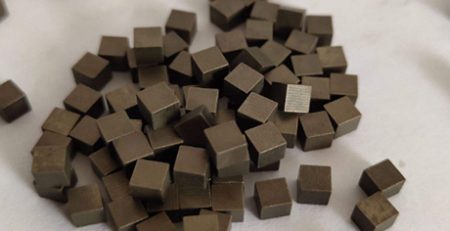
✔ Neodymium (NdFeB) magnets – Too hard for lasers without cracking
✔ Ferrite (ceramic) magnets – Brittle and prone to thermal shock
✔ Rare-earth magnetic alloys – Expensive materials benefit from minimal waste
Advantages of Diamond Wire Cutting:
✅ No heat damage – Preserves magnetic properties
✅ Smooth, crack-free edges – Critical for precision applications
✅ Minimal material loss – Thin kerf (cut width) saves costs
Limitations:
❌ Slower than laser for thin materials
❌ Higher initial setup cost
3. Best Cutting Method by Magnet Type
| Magnet Type | Best Cutting Method | Why? |
| Electrical steel | Laser cutting | Fast, precise for thin sheets |
| Neodymium (NdFeB) | Diamond wire loop | Prevents cracking & demagnetization |
| Ferrite (ceramic) | Diamond wire loop | Avoids thermal shock |
| Nickel alloys | Laser cutting (fiber laser) | Handles reflective surfaces well |
4. Key Considerations When Cutting Magnets
Laser Cutting Tips
– Use fiber lasers for reflective metals
– Optimize power/speed to minimize HAZ
– Apply assist gas (N₂) to reduce oxidation
Diamond Wire Cutting Tips
– Use fine-grit diamond wire for smoother cuts
– Maintain coolant flow to prevent overheating
– Control wire tension for consistent cuts
5. Conclusion: Which Method Should You Choose?
✔ For thin, soft magnetic metals → Laser cutting (fast & precise)
✔ For hard/brittle magnets → Diamond wire loop (no thermal damage)
✔ For high-volume production → Evaluate cost vs. precision needs
Final Recommendation:
– Prototyping or thin sheets? Try laser cutting.
– Hard magnets needing perfect edges? Diamond wire is best.