The Unseen Precision: How Diamond Cutting Wire Loops are Revolutionizing High-End Graphite Golf Clubs
In the world of competitive golf, the margin for error is vanishingly small. A single stroke can be the difference between victory and defeat. This relentless pursuit of perfection drives innovation not just in player technique, but in the very equipment they use. While much attention is paid to club head technology and ball design, a quiet revolution is taking place in the manufacturing process itself, centered on one of the most critical components: the graphite shaft. This blog explores how an advanced manufacturing technique—diamond cutting wire loop technology—is unlocking new levels of performance, consistency, and customization in high-end graphite golf clubs.
The Graphite Golf Shaft: A Marvel of Modern Engineering
Before delving into the cutting process, it’s essential to understand why graphite is the material of choice for premium shafts. Unlike the rigid steel of the past, graphite composites offer an exceptional strength-to-weight ratio. By weaving carbon fibers into a resin matrix, engineers can precisely control the shaft’s key properties:
- Flex Profile: The bending characteristics at different points along the shaft (e.g., tip-stiff, mid-soft).
- Torque: The amount of shaft twist during the swing.
- Kick Point: The location where the shaft bends most during the downswing.
This “tunability” allows for shafts to be designed for specific swing speeds, tempos, and player preferences. However, this complex, layered structure also presents a monumental manufacturing challenge, especially when it comes to the final trimming and finishing.
The Limitation of Traditional Cutting Methods
Traditionally, finishing a graphite shaft involved abrasive cutting wheels or saws. While functional for mass-market production, these methods have significant drawbacks when applied to the highest echelons of shaft manufacturing:
- Delamination and Fraying: The high-speed, high-force contact of a blade can tear and unravel the carbon fibers at the cut point, creating a weak spot and a poor aesthetic finish. This compromises the structural integrity of the shaft tip, which is under immense stress during impact.
- Thermal Damage (Heat-Affected Zone): The friction from a traditional blade generates intense local heat. This can degrade the epoxy resin that binds the carbon fibers, altering the flex and feel of the shaft in that specific area. This “thermal shock” is an invisible defect that can lead to premature failure.
- Lack of Precision: It is incredibly difficult to achieve a perfectly clean, perpendicular cut with a blade consistently. Any imperfection in the cut can affect how the shaft sits in the hosel, potentially altering the club’s lie angle and performance.
For a product where consistency is paramount, these limitations were a major bottleneck. This is where diamond cutting wire loop technology enters the game.
The Game Changer: Diamond Cutting Wire Loop Technology
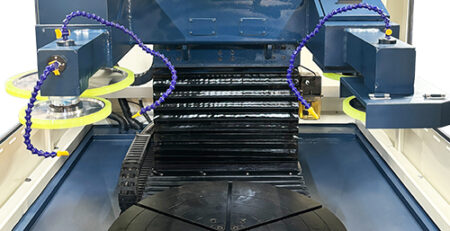
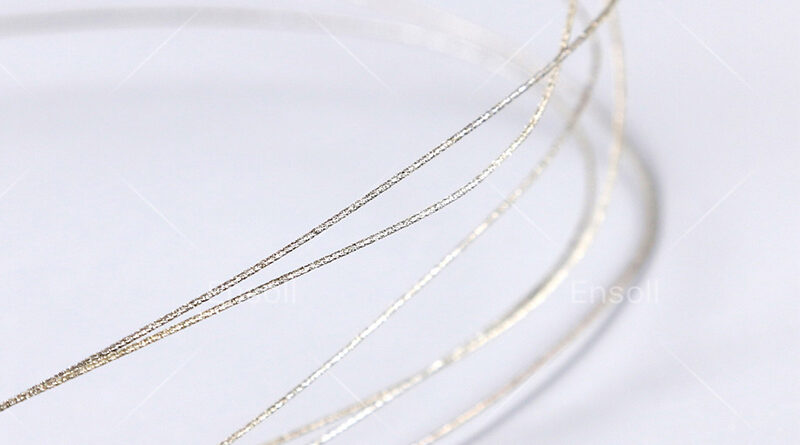
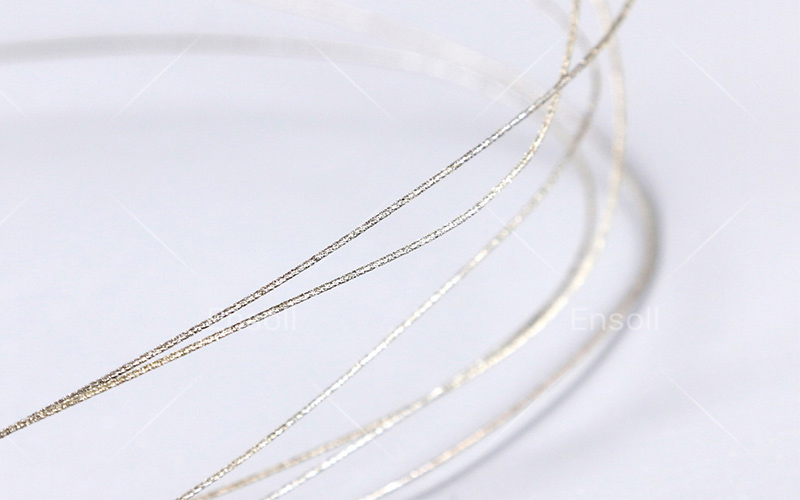
Imagine a cutting tool that exerts no lateral pressure, generates minimal heat, and can slice through the toughest materials with microscopic precision. This is the reality of diamond cutting wire loop technology. A continuous loop of high-tensile wire, coated with industrial diamond particles, moves at high speed over a guided path, acting as a flexible, ultra-precise saw.
So, how does this apply to crafting the perfect graphite golf shaft? The application is as brilliant as it is precise.
How to Cut a Graphite Golf Shaft with a Diamond Wire Loop
The process of trimming a graphite shaft to its final playing length or preparing its tip for insertion is transformed by this technology. Here is a step-by-step breakdown:
- Securing the Shaft: The unfinished graphite shaft is securely clamped into a specialized fixture on the wire saw machine. The fixture is designed to hold the shaft without crushing its delicate composite structure and to present it at the exact required angle to the wire.
- Programming the Cut: A technician programs the machine’s CNC (Computer Numerical Control) system with the precise cut parameters. This includes the exact length to be trimmed, the angle of the cut (almost always a perfect 90 degrees), and the speed of the wire. For custom club fitters, this could even involve creating a specific tip profile.
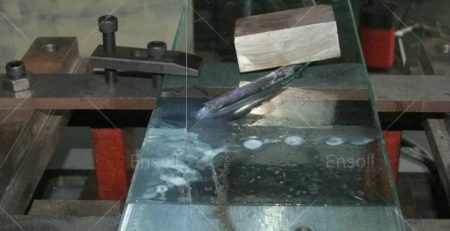
- The Cutting Process: The diamond-impregnated wire loop is set in motion. As it travels, a coolant is applied. This serves two critical purposes: it keeps the wire and the graphite cool, preventing any thermal damage, and it flushes away the microscopic graphite dust, ensuring a clean cut.
- The Cut Itself: The diamond particles on the wire act as countless microscopic cutting tools. They abrade the carbon fibers and resin through a grinding action, rather than a tearing or chopping action. Because the wire is under tension but flexible, it exerts zero lateral pressure on the shaft. This eliminates the risk of delamination, splintering, or creating micro-fractures in the composite layers.
- The Result: What remains is a perfectly clean, mirror-smooth cut end. The carbon fibers are sheared cleanly, with no fraying. The structural integrity of the shaft is fully maintained, and the absence of heat ensures the resin’s properties are unchanged. This cut is perfectly perpendicular, guaranteeing a perfect fit into the club head hosel.
Beyond the Cut: The Tangible Benefits for Golfers
This manufacturing precision translates directly into performance advantages for the player:
Unmatched Consistency: Every shaft coming off the production line is identical. When a golfer finds their perfect shaft, they can be confident that the next one will perform exactly the same. This consistency is the holy grail for tour professionals and serious amateurs.
Enhanced Durability and Safety: By eliminating the weak points created by traditional cutting, a diamond wire-cut shaft is less prone to developing cracks or breaking at the tip, especially for players with high swing speeds. This enhances the club’s lifespan and player safety.
Optimized Performance: A shaft that is undamaged from the manufacturing process will perform precisely as the engineers intended. The designed flex profile, torque, and kick point are preserved, delivering the exact feel and power transfer the player paid for.
Enabling Complex Customization: This technology isn’t just for simple trim cuts. It can be used to create precise notches, profiles, or other complex features on the shaft for advanced custom fitting, pushing the boundaries of what is possible in shaft design.
A Comparative Look: Why This Technology is Superior
The difference is stark when compared side-by-side:
- Traditional Abrasive Wheel: The cut edge often looks fuzzy or charred under magnification. The fibers are torn, and the resin may be slightly melted.
- Diamond Cutting Wire Loop: The cut edge is clean and sharp. The individual carbon fibers are visible and neatly severed, with no evidence of thermal or mechanical damage.
The Future of Club Manufacturing
While currently a technology reserved for the most premium and custom golf shafts, the use of diamond cutting wire loops represents the future of golf equipment manufacturing. As the demand for perfection grows, so too will the adoption of these advanced, material-friendly processes. It is a testament to the industry’s commitment to innovation, proving that sometimes, the biggest advances come not from what you make, but from how you make it.
Conclusion
In the search for every possible advantage, golfers invest in lessons, training, and the latest equipment. Yet, many are unaware that the very integrity of their expensive graphite shafts can be compromised by a crude cutting process. Diamond cutting wire loop technology eliminates this compromise. It is the definitive method for ensuring that the sophisticated engineering embedded in a graphite shaft is fully realized in the final product. For the discerning golfer who demands the best, understanding this “unseen precision” is the final piece of the puzzle in appreciating what truly makes a golf club exceptional.