
The Physics and Materials Science Behind the Diamond Wire Loop: A Comprehensive Guide
For decades, the manufacturing sector relied on heavy mechanical blades, abrasive slurries, and high-powered lasers to section industrial materials. However, as modern engineering pushes the boundaries of material science—introducing ultra-hard substrates like Silicon Carbide ($SiC$), gallium nitride ($GaN$), and specialized aerospace matrix composites—traditional separation techniques have hit a physical wall.
To overcome these limitations, engineers developed the diamond wire loop. This educational guide explores the underlying physics, material composition, and mechanical principles that make this continuous abrasive consumable the premier choice for modern precision slicing.
1. The Anatomy of a Diamond Wire Loop: Core and Coating
At first glance, a diamond wire loop looks like a simple metallic string formed into an endless circle. In reality, it is a highly engineered composite structure consisting of two primary components: the high-tensile core wire and the super-abrasive diamond layer.
The Core Wire
The foundation of the loop is made from high-strength carbon steel or specialized steel alloys. Because the loop must rotate at ultra-high linear speeds—frequently ranging from 30 to over 60 meters per second—while wrapped around a series of machine pulleys, it experiences extreme, cyclic tensile stress. The core wire must possess exceptional fatigue resistance to prevent premature snapping, along with high elasticity to maintain stable tension during prolonged cutting cycles.
The Diamond Matrix
The cutting power of the loop comes from microscopic diamond particles fixed to the steel core. Because diamond is the hardest known natural substance, it occupies the top position ($10$) on the Mohs hardness scale. These microscopic diamonds act as thousands of miniature cutting teeth.
The particles are bonded to the steel wire using one of two primary methods:
Electroplating: A method where nickel is chemically deposited around the diamond grains, locking them securely onto the steel core. This yields a dense concentration of diamonds, ideal for slicing extremely hard crystals.
Resin Bonding: A technique that utilizes a durable polymer matrix to hold the diamonds. This creates a softer cutting action, frequently preferred when a highly polished surface finish is required on fragile materials.
2. The Mechanics of the “Endless” Unidirectional Cut
To truly appreciate the engineering behind the diamond wire loop, one must understand how it differs from traditional reciprocating wire saws. A reciprocating saw moves back and forth, meaning the wire must decelerate, come to a complete stop, and reverse direction thousands of times during a single cutting operation. This constant change in momentum introduces severe mechanical vibrations, uneven wire wear, and inconsistent tension.
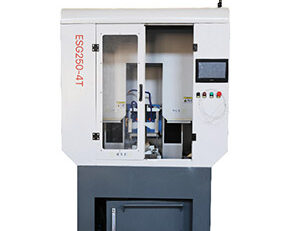
In contrast, a diamond wire loop operates in a single, continuous loop. Driven by the motorized pulleys of a specialized diamond wire saw cutting machine, the loop moves continuously in one direction. This creates several profound mechanical advantages:
- Vibration Elimination: The fluid, unidirectional movement drastically reduces kinetic micro-shocks, which prevents micro-cracks and structural chipping along the edges of brittle materials.
- Uniform Wear Distribution: Because the entire length of the loop passes through the workpiece sequentially at high velocity, the diamond grit wears down evenly, maximizing the operational lifespan of the consumable.
- Optimal Kinetic Energy: High linear speeds allow the microscopic diamonds to cleanly shear away material at a microscopic level, translating into a much faster feed rate without increasing the physical force applied to the workpiece.
3. The Thermodynamic Solution: True “Cold Cutting”
When traditional saws or lasers cut through dense materials, they generate massive localized friction or thermal energy. In semi-conductive crystals or optical glass, this heat causes severe thermal expansion, leading to internal residual stresses, micro-fractures, and geometric distortion.
The diamond wire loop resolves this issue by employing a micro-abrasive grinding mechanism rather than a high-friction shearing or melting action. As the loop travels through the workpiece, it removes material in the form of ultra-fine dust (swarf).
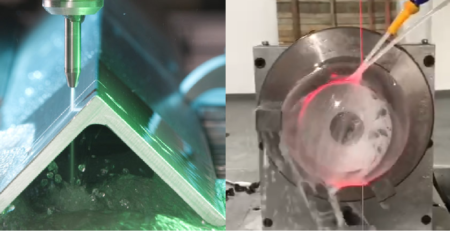
When paired with a cutting machine’s integrated fluid delivery system, the coolant continuously flushes the cutting track. This fluid performs two critical tasks: it instantly carries away the kinetic heat generated by the micro-grinding action and flushes out the swarf to prevent the wire from clogging. The result is a true “cold cut” that maintains a perfectly stable thermal environment, preserving the delicate crystalline integrity of expensive materials like sapphire or quartz.
4. Engineering Impact: Drastically Lowering Secondary Processing Costs
The ultimate proof of the efficiency of the diamond wire loop lies in the structural quality of the finished cut. When executing a slice, the combined stability of the machine and the precision of the loop regularly yields a surface roughness ($Ra$) profile of less than $0.2\ \mu\text{m}$. Furthermore, geometric positioning tolerances are maintained between $\pm0.01\ \text{mm}$ and $\pm0.05\ \text{mm}$.
For manufacturing facilities, this extreme precision is a massive financial advantage. Traditional cutting methods leave behind rough, wavy, and damaged surfaces that require hours of secondary grinding, lapping, and chemical polishing to rectify. By delivering a near-perfect surface finish straight from the initial cut, the loop dramatically compresses production timelines and slashes secondary labor and material costs.