Half-Cut Cell vs. Full Cell Solar Panels: Which Delivers Better Performance?
As solar technology continues to evolve, manufacturers are constantly developing new designs to improve panel efficiency and reliability. Two prominent configurations in today’s market are half-cut cell and full cell solar panels. This article examines their key differences, advantages, and manufacturing processes – with particular focus on how diamond wire saw cutting machines enable the production of superior half-cut cells.
Understanding the Basic Designs
Full Cell Solar Panels
Traditional full cell panels use standard 156mm or 166mm square silicon wafers arranged in a 60-cell (residential) or 72-cell (commercial) configuration. These complete square cells are connected in series strings to build voltage.
Half-Cut Cell Solar Panels
Half-cut cell technology takes standard solar cells and cuts them in half using precision diamond wire saw cutting machines. A typical 60-cell panel becomes a 120-half-cell panel, with the cells arranged in two separate parallel strings.
Key Performance Differences
1. Improved Efficiency
– Half-cut cells reduce current by half while maintaining voltage
– Lower resistive (I²R) losses in cell interconnects
– Typical efficiency gain: 2-3% over full cell equivalents
2. Better Shade Tolerance
– Two parallel strings minimize impact of partial shading
– Up to 50% less power loss when shaded compared to full cell panels
3. Enhanced Reliability
– Smaller cells experience less thermal stress
– Reduced risk of microcracks propagating
– Lower operating temperatures increase lifespan
The Manufacturing Process: Why Cutting Matters
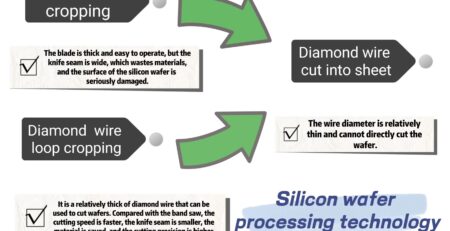
The quality of half-cut cells depends entirely on the precision of the cutting process. This is where diamond wire saw cutting machines demonstrate their superiority:
Diamond Wire Saw Cutting Advantages:
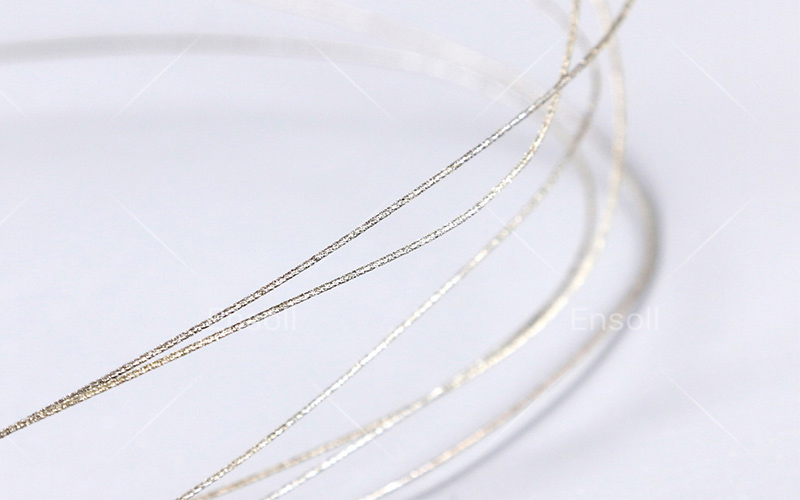
- Superior Edge Quality – Produces clean cuts with minimal microcracks (<1μm surface roughness)
- High Throughput – Modern machines can process thousands of wafers per hour
- Material Conservation – Kerf loss as low as 100μm preserves valuable silicon
- Consistent Dimensions – Maintains ±0.1mm tolerance across all half-cells
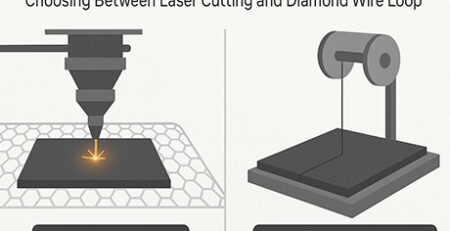
Comparison of Cutting Methods:
| Parameter | Diamond Wire Saw | Laser Cutting |
| Cutting Speed | 15-25 m/s | 5-10 m/s |
| Edge Damage | Minimal | Heat-affected zone |
| Wafer Thickness | 150-300μm | Best for <200μm |
| Operating Cost | $0.05/cell | $0.08/cell |
Real-World Performance Data
Recent field tests by TÜV Rheinland show:
– Half-cut cell panels produce 3-5% more energy annually
– 25% lower degradation rate after 5 years
– 0.5% higher PTC/STC ratio (better real-world performance)
Conclusion: Which Should You Choose?
For most installations, half-cut cell panels offer clear advantages:
✔ Higher energy yield
✔ Better shade performance
✔ Longer operational life
The development of advanced diamond wire saw cutting machines has been crucial in making half-cell technology commercially viable. As manufacturing costs continue to decline, half-cut designs are becoming the new standard for both residential and utility-scale solar installations.
When evaluating panels, look for manufacturers using precision diamond wire cutting processes to ensure you get the full benefits of half-cell technology. The quality of the initial cell cutting directly impacts the panel’s long-term performance and reliability.