Silicon Carbide Processing: Navigating the Precision Revolution Between Laser and Diamond Wire Saw Technologies
In advanced materials engineering, processing silicon carbide represents one of the most significant technical challenges facing modern manufacturing. As the backbone of next-generation power electronics, electric vehicle systems, and aerospace components, SiC demands processing methodologies that balance precision with practicality. The emergence of two dominant technologies—laser processing and diamond wire saw solutions—has created a new paradigm in semiconductor manufacturing, each offering distinct pathways through the complexities of this ultra-hard material.
The selection between these technologies extends beyond simple cost calculations, touching upon fundamental questions of material science, production philosophy, and end-use application requirements. This analysis provides a fresh perspective on navigating this critical decision point in advanced materials processing.
Diamond Wire Processing: The Mechanical Precision Approach
Fundamental Mechanism and Material Interaction
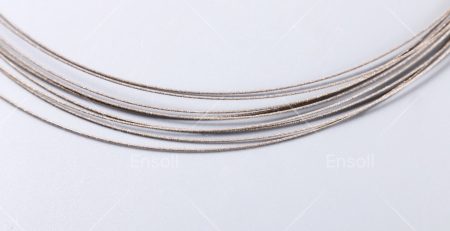
Diamond wire processing operates on principles of controlled mechanical abrasion, where diamond particles embedded in a continuously moving wire create precise, predictable material removal. This methodology represents an evolution beyond traditional silicon carbide cutting disc approaches, offering improved control and consistency.
The technology’s effectiveness stems from its ability to maintain consistent mechanical engagement with the SiC crystal structure. Unlike conventional silicon carbide cut off wheel methods that rely on random abrasive action, diamond wire systems provide deterministic material removal through precisely engineered diamond distribution and optimized wire dynamics.
Strategic Advantages in Industrial Deployment
Diamond wire technology brings several transformative benefits to SiC processing:
- Deterministic Process Control: The mechanical nature of diamond wire cutting enables real-time monitoring and adjustment of processing parameters, creating a predictable, repeatable manufacturing environment essential for high-volume production.
- Scalable Infrastructure Compatibility: The technology integrates seamlessly with existing semiconductor manufacturing infrastructure, minimizing retooling requirements and accelerating implementation timelines.
- Material-Agnostic Processing Platform: Beyond SiC, diamond wire systems effectively process diverse advanced materials including silicon, sapphire, and specialized ceramics, providing manufacturing flexibility across product lines.
- Progressive Quality Enhancement: Continuous improvements in wire engineering, diamond particle distribution, and tension control systems have steadily improved processing quality while reducing consumable costs.
Inherent Limitations and Application Boundaries
Despite significant advancements, diamond wire processing faces persistent challenges:
- Crystalline Structure Impact: The mechanical forces inherent in wire processing can introduce subsurface lattice disturbances that may affect electronic performance in sensitive applications.
- Geometric Constraint Realities: While excellent for standard wafer formats, the technology faces limitations in complex contour processing and intricate feature creation.
- Consumable Ecosystem Dependencies: The processing economics remain tied to a complex supply chain for specialized wires and maintenance components.
Laser Processing: The Photonic Revolution in Material Engineering
Fundamental Principles and Advanced Applications
Laser processing represents a fundamental shift from mechanical to photonic material interaction, utilizing precisely controlled light energy to achieve material separation through sublimation and ablation mechanisms. This approach eliminates mechanical stress concerns while introducing new possibilities for complex geometry processing.
The technology spectrum ranges from nanosecond systems for general processing to femtosecond lasers for ultra-precise applications, each offering distinct advantages for specific SiC processing requirements. Advanced implementations include hybrid approaches combining laser scoring with mechanical separation for optimal results.
Transformative Capabilities and Quality Advantages
Laser technology introduces several paradigm-shifting capabilities:
- Stress-Free Material Processing: By eliminating mechanical contact, laser systems prevent the microcrack propagation and subsurface damage associated with mechanical processing methods.
- Geometric Freedom and Design Flexibility: The non-contact nature of laser processing enables creation of complex features, contours, and patterns impossible with mechanical approaches, opening new possibilities for device architecture.
- Digital Process Integration: Laser systems seamlessly integrate with digital manufacturing platforms, enabling real-time process adjustment, automated quality monitoring, and seamless adaptation to design changes.
- Multi-Functional Processing Capability: Advanced laser platforms can combine cutting, drilling, and surface modification operations in single processing sequences, reducing handling and increasing overall efficiency.
Implementation Challenges and Technical Considerations
Laser processing presents several significant implementation considerations:
- Thermal Management Imperatives: The concentrated energy delivery requires sophisticated thermal management strategies to prevent undesirable material modifications in heat-sensitive regions.
- Capital Intensity and Expertise Requirements: Successful implementation demands significant investment in both equipment and specialized technical expertise for process development and optimization.
- Throughput Economics: While offering unparalleled precision, laser processing typically involves longer processing times per unit compared to multi-wire mechanical systems for high-volume applications.
Comparative Analysis: Strategic Technology Selection Framework
Application-Aligned Technology Matching
The optimal selection between these technologies depends on careful alignment with specific application requirements:
– High-Volume Power Electronics: For standard-format SiC wafers destined for automotive and industrial power devices, diamond wire processing typically offers the best balance of throughput, cost efficiency, and proven reliability.
– Advanced RF and Microwave Components: Applications requiring complex geometries, specialized features, or minimal subsurface damage benefit significantly from laser processing capabilities.
– Research and Prototype Development: The flexibility and quick turnaround of laser systems make them ideal for development environments where design iterations are frequent and volumes are low.
– Hybrid Manufacturing Approaches: Many advanced manufacturers are implementing both technologies, leveraging their respective strengths for different stages of the manufacturing process.
Economic Analysis and Return on Investment
The economic analysis extends beyond simple equipment costs to encompass total cost of ownership:
– Diamond Wire Economics: Characterized by predictable consumable costs and established operational parameters, suitable for environments prioritizing cost predictability and volume production.
– Laser Processing Economics: Features higher initial investment offset by potential savings through reduced material waste, higher yields, and elimination of secondary processing steps.
Future Development Trajectories and Industry Evolution
Both technologies continue to evolve along distinct but complementary paths:
Diamond Wire Advancement Vectors
– Ultra-fine wire development for reduced kerf loss
– Intelligent tension and guidance systems for improved precision
– Multi-wire configurations for increased throughput
– Advanced diamond particle engineering for extended service life
Laser Technology Evolution
– Increased power and repetition rates for improved throughput
– Advanced beam delivery and shaping for enhanced precision
– Hybrid processing approaches combining multiple laser types
– AI-driven process optimization for quality and efficiency
Implementation Strategy and Technology Integration
Successful implementation requires careful consideration of several strategic factors:
- Manufacturing Ecosystem Integration: Both technologies must integrate with existing manufacturing workflows, metrology systems, and quality control processes.
- Personnel Development and Knowledge Management: The sophisticated nature of both technologies demands investment in specialized training and knowledge retention strategies.
- Supply Chain and Support Infrastructure: Reliable operation depends on robust supply chains for consumables and responsive technical support networks.
- Technology Roadmap Alignment: Selection should consider not only current requirements but also alignment with anticipated future product needs and technology trends.
Conclusion: Strategic Positioning for the Silicon Carbide Era
The evolution of SiC processing technologies reflects the broader transformation occurring across advanced manufacturing. Both diamond wire and laser processing have established strong positions within the manufacturing ecosystem, each offering unique advantages for specific applications and production philosophies.
The most successful manufacturers will be those who develop sophisticated understanding of both technologies, implementing them strategically based on application requirements rather than defaulting to conventional preferences. As SiC continues its expansion into new application areas and performance requirements intensify, both processing methodologies will continue to evolve, offering increasingly capable solutions for the challenges of advanced materials processing.
The future likely holds not a single dominant technology but a diverse ecosystem of processing solutions, with manufacturers increasingly implementing multiple technologies to address different aspects of their production requirements. This diversified approach represents the most robust strategy for navigating the complex landscape of advanced materials processing in the coming decades.