Silicon Carbide Machining Process: The Diamond Wire Loop Advantage
In the landscape of third-generation semiconductors, Silicon Carbide (SiC) has emerged as the “black gold” of the power electronics industry. Its ability to handle high voltages, dissipate heat, and operate at high frequencies makes it indispensable for electric vehicles (EVs), 5G infrastructure, and renewable energy grids.
However, the very properties that make SiC superior—its extreme hardness (9.5 on the Mohs scale) and fragility—make the Silicon Carbide Machining Process one of the most difficult engineering challenges in modern manufacturing. At Ensoll, we have met this challenge head-on. As we celebrate the 2026 Lantern Festival and embark on a new year of innovation, we are proud to showcase our Diamond Wire Loop technology as the key to unlocking SiC productivity.
1. The Bottleneck: Challenges in SiC Slicing
The Silicon Carbide Machining Process begins with the ingot. Because SiC is nearly as hard as diamond, traditional slicing methods often fail to meet the demands of modern industry.
The Hardness Barrier
Standard steel blades or even reciprocating diamond wires struggle with the sheer resistance of SiC. This leads to slow cutting speeds, frequent tool failure, and excessive heat generation, which can induce thermal stress in the crystal.
The Cost of Waste (Kerf Loss).
Standard steel blades or even reciprocating diamond wires struggle with the sheer resistance of SiC. This leads to slow cutting speeds, frequent tool failure, and excessive heat generation, which can induce thermal stress in the crystal.
Surface Integrity Requirements
A sliced wafer is only as good as its surface. High Total Thickness Variation (TTV) or deep sub-surface damage (SSD) requires hours of expensive Chemical Mechanical Polishing (CMP) to fix.
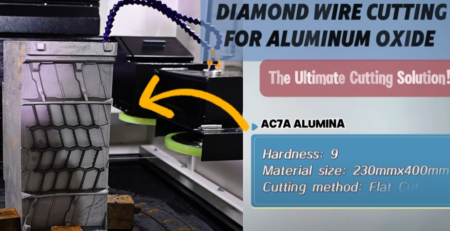
[Video Showcase: High-Velocity SiC Slicing]
2. Why the Diamond Wire Loop is the Ultimate Tool
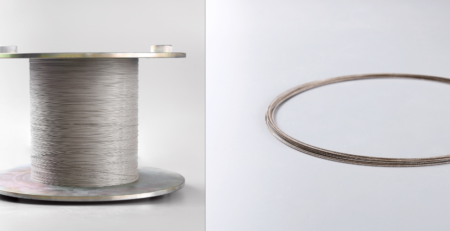
At Ensoll, we have transitioned many of our partners from traditional saws to the Endless Diamond Wire Loop. The difference is found in the physics of the cut.
A. Uninterrupted Kinetic Energy
Unlike reciprocating wires that must slow down, stop, and reverse direction, the Ensoll Diamond Wire Loop travels in a continuous, unidirectional path. This allows for linear speeds of up to 60mm/min
The Impact: This constant velocity eliminates the vibration caused by directional changes, resulting in a cleaner, faster cut.
B. Ultra-Thin Profiles for Maximum Yield
Our 2026 line of diamond wire loops features high-tensile cores that allow for significantly thinner diameters. In the Silicon Carbide Machining Process, every micron saved in the kerf is a micron of pure profit. Our loops allow for more wafers per ingot than almost any other tool on the market.
C. Reduced Sub-Surface Damage
Because the diamond grits on an Ensoll loop are fixed via a proprietary electroplating process, the cutting action is a consistent “micro-grinding.” This leaves a surface so smooth that it significantly reduces the time and cost required for post-cut grinding and polishing.
[Image Showcase: Precision and Quality]
[Image Showcase: Precision and Quality]
3. Engineering “Better” for 2026: The Ensoll Promise
On this Lantern Festival, as we officially commence our 2026 journey, Ensoll is introducing three core pillars of fulfillment specifically for the semiconductor sector:
- Precision Fulfillment: Every loop is manufactured to micron-level tolerances, ensuring that the first wafer you cut is identical to the last.
- Service Fulfillment: We understand that in the SiC industry, downtime is not an option. We offer a Global 4-hour response for technical support to keep your production lines moving.
- Partnership Fulfillment: We don’t just sell loops; we optimize processes. Our engineers work with you to dial in the perfect tension, speed, and coolant flow for your specific SiC grade.
4. The Future of the Silicon Carbide Machining Process
The transition to 8-inch SiC wafers is already underway. Larger wafers mean higher risks of breakage and more significant losses if a cut goes wrong. Ensoll’s Diamond Wire Loop technology is designed to scale. Our high-tension frames and ultra-stable wire loops provide the reliability needed for large-diameter wafering, ensuring that the Silicon Carbide Machining Process remains profitable even as wafer sizes increase.
Conclusion: Shaping the Power of Tomorrow
Silicon Carbide is the future of power electronics, but it requires the tools of the future to be processed effectively. By integrating Ensoll’s Diamond Wire Loop into your Silicon Carbide Machining Process, you are choosing a path of higher yields, lower costs, and unparalleled surface quality.
As the lanterns rise to celebrate the New Year, let us help you elevate your production to new heights.