How to Cut Solar Cells: Precision Techniques with Diamond Cutting Wire Loop Technology
Cutting solar cells is a critical manufacturing process that directly impacts panel efficiency, durability, and production costs. As solar technology advances, methods like diamond cutting wire loops have become the gold standard for precision slicing of photovoltaic materials. This guide explores cutting techniques, their applications, and why diamond wire technology outperforms alternatives for modern solar manufacturing.
Why Precision Cutting Matters for Solar Cells
Solar cells require flawless edges to maximize light absorption and minimize electrical losses. Imperfect cuts lead to:
– Micro-cracks reducing cell efficiency and lifespan.
– Material waste increasing production costs.
– Poor electrical connectivity between cells.
Diamond cutting wire loops address these issues with unmatched precision and minimal kerf loss.
Common Solar Cell Cutting Methods
1. Mechanical Scribing
– Process: Uses a hardened tip to scratch and break cells.
– Limitations: High breakage rates (>15%), rough edges, and limited to thicker wafers.
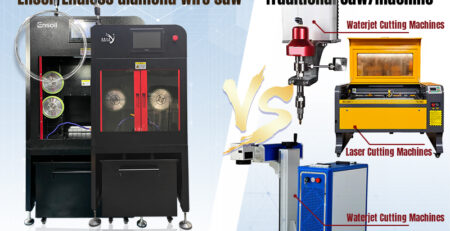
- Laser Cutting
– Process: Focused laser beams ablate material to create cuts.
– Advantages: High speed and narrow kerf (30–50 µm).
– Disadvantages: Heat-affected zones (HAZ) degrade cell performance and efficiency.
- Ultrasonic Cutting
– Process: High-frequency vibrations slice through materials.
– Best For: Flexible thin-film cells but slow for mass production.
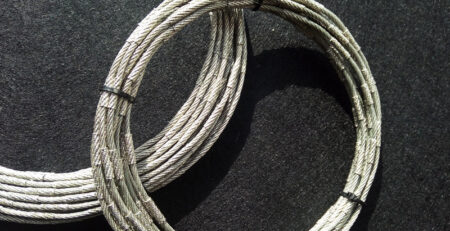
- Diamond Cutting Wire Loop (Recommended)
– Process: A diamond-coated wire moves at high speed (15–25 m/s) to cleanly slice cells.
– Advantages:
– Cold cutting with no thermal damage.
– Kerf loss as low as 80 µm vs. 150–250 µm for abrasive methods.
– Smooth edges (surface roughness <0.5 µm) for higher efficiency.
– High throughput (2,000+ wafers/hour).
Step-by-Step: Cutting Solar Cells with Diamond Wire Loops
1. Material Preparation
– Secure silicon ingots or thin-film substrates to prevent vibration.
– Clean surfaces to avoid contamination during cutting.
2. Machine Setup
– Select a diamond cutting wire with grit size optimized for the material:
– Monocrystalline/Polycrystalline Si: 20–30 µm diamonds.
– Thin-Film (CIGS/CdTe/a-Si): 10–20 µm diamonds.
– Set wire tension to 15–25 N and speed to 15–20 m/s.
3. Cutting Process
– Coolant (deionized water) flows to reduce friction and remove debris.
– The wire loop cuts multiple wafers simultaneously with precision (±0.1 mm).
- Post-Processing
– Clean wafers to remove residual particles.
– Inspect edges for micro-cracks using automated optical systems.
Applications Across Solar Technologies
– Monocrystalline/Polycrystalline Cells: Diamond wires handle thicknesses from 120–300 µm with minimal loss.
– Bifacial Cells: Preserve transparent rear surfaces and conductive layers.
– Thin-Film Cells (CIGS/CdTe/a-Si): Prevent delamination and cracking in fragile layers.
– PERC/TOPCon/HJT Cells: Maintain passivation layer integrity for higher efficiency.
Why Diamond Cutting Wire Loops Outperform Other Methods
- Higher Efficiency: Cells gain 1.5–2% efficiency due to cleaner edges.
- Lower Costs: Reduced kerf loss saves expensive materials like silicon.
- Scalability: Processes thousands of wafers/hour for GW-scale production.
- Zero Thermal Damage: Unlike lasers, no HAZ ensures full cell performance.
Future Trends in Solar Cell Cutting
– Thinner Wafers (<100 µm): Diamond wires adapt to ultra-thin slicing.
– AI Integration: Smart tension control and real-time monitoring.
– Sustainability: Recyclable wires and closed-loop coolant systems.
Conclusion: Embrace Diamond Wire Technology for Superior Results
For manufacturers seeking higher yields, lower costs, and premium quality, diamond cutting wire loops are the definitive solution. This technology supports the solar industry’s shift toward advanced cells (bifacial, HJT, thin-film) while maximizing efficiency and sustainability.
Invest in diamond wire cutting to lead the renewable energy revolution.