Diamond Wire Loops for Industrial Ceramics
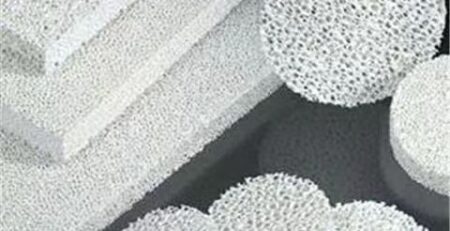
The global landscape of manufacturing in 2026 is defined by a relentless push for materials that are lighter, stronger, and more resistant to extreme environments. This has led to the explosive proliferation of industrial ceramics (technical ceramics) across sectors ranging from aerospace and defense to medical devices and semiconductor fabrication.
Materials like Aluminum Oxide ($\text{Al}_{2}\text{O}_{3}$), Silicon Nitride ($\text{Si}_{3}\text{N}_{4}$), Zirconia ($\text{ZrO}_{2}$), and Silicon Carbide (SiC) offer unparalleled performance. However, their defining characteristics—extreme hardness, high brittle-to-ductile transition points, and sensitivity to thermal shock—make Industrial Ceramics Cutting an exceptional engineering challenge.
Traditional slicing methods, once considered industry standards, are proving inadequate for the requirements of 2026. At Ensoll, we have met this challenge by developing the Endless Diamond Wire Loop. This technology represents not just an incremental improvement, but a complete re-imagining of how hard and brittle materials are processed.
1. The Paradox of Hardness: Why Traditional Cutting Methods Fail
The very properties that make technical ceramics valuable make them exceptionally difficult to machine. Conventional cutting techniques, such as slurry saws or traditional abrasive wheels, suffer from distinct limitations when applied to Industrial Ceramics Cutting:
Excessive Sub-Surface Damage (SSD)
Traditional mechanical cutting often involves “plowing” or tearing through the material. The high forces involved, combined with the material’s intrinsic brittleness, inevitably lead to micro-cracking and deep sub-surface damage (SSD). This can compromise the structural integrity of the final component, leading to catastrophic failure under stress.
The Problem of Edge Chipping
Brittle materials are prone to chipping, especially on the entry and exit points of a cut. This “edge chipping” often necessitates extensive and expensive secondary grinding or polishing operations, significantly increasing production costs and time.
Thermal Shock Sensitivity
Many technical ceramics, despite their heat resistance, are sensitive to sudden temperature gradients. Traditional methods generate substantial heat at the tool-workpiece interface. Without precise thermal management, this can induce thermal cracks, rendering expensive ceramic workpieces useless.
Slow Throughput and High Slurry Waste
Reciprocating slurry saws, common in the past, operate at slow speeds and generate thousands of gallons of toxic slurry waste. In 2026, where environmental sustainability is a core business metric, this model is no longer tenable.
2. The Endless Solution: The Ensoll Diamond Wire Loop Advantage
To address these challenges, Ensoll pioneered the use of the Endless Diamond Wire Loop (EDWL) specifically for technical material fabrication. The difference between an EDWL and a traditional saw is fundamental: it is the difference between an oscillating saw and a high-velocity, unidirectional belt grinder.
By closing the loop and eliminating the need for the wire to reverse direction, we have unlocked a new physics of cutting for the Industrial Ceramics Cutting process.
Micro-Grinding: A True “Cold Cutting” Action
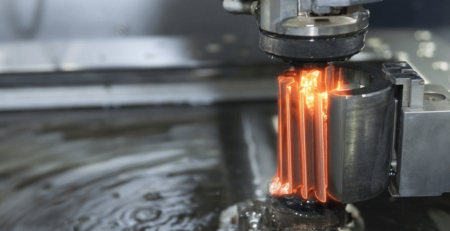
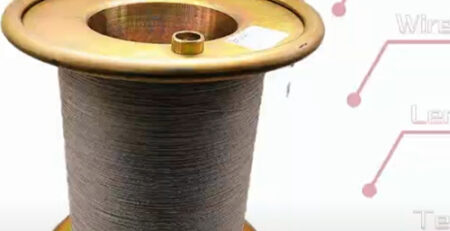
The Diamond Wire Loop is not a saw in the traditional sense. It utilizes electroplated industrial diamonds fixed to a high-tensile core wire. As the loop travels at linear speeds up to 60 m/s, the diamond particles execute a precise micro-grinding action. This offers several transformative benefits:
- Minimal Mechanical Force: The force required to grind a micro-thin layer is significantly lower than the force needed to plow through the material. This drastically reduces the creation of micro-cracks and SSD.
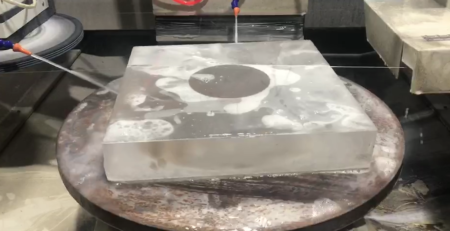
- No Edge Chipping: The gentle, continuous grinding action, especially when supported by a stable technical platform (machine), eliminates the chatter that causes edge chipping, providing a “perfect edge” right off the saw.
- Superior Surface Finish: The micro-grinding action produces a surface smoothness typically better than 0.2 μm (Ra), often eliminating the need for primary grinding steps.
视频
For Industrial Ceramics Cutting, this integration provides essential capabilities:
Constant Tension Control
Maintaining constant tension is the key to accurate cutting. If the wire slackens, it will “wander,” creating waves in the cut and compromising TTV (Total Thickness Variation). If it is too tight, it will snap. Our machines utilize advanced real-time feedback systems to maintain optimal tension regardless of the material’s resistance.
Precision Material Handling and Multi-Angle Slicing.
Technical ceramics rarely come in simple geometries. Our machinery features multi-functional sample stages that support rotation and tilting, allowing for precise, complex-angle slicing. This versatility is essential for creating everything from medical implants to armor components.
Integrated Wet and Dry Cutting Environments
Different ceramics react differently to environment. For semiconductor-grade materials, a precise coolant system is necessary for thermal stability and debris removal. For other materials, a dry-cutting environment might be required. Ensoll machinery is designed to provide “Better” fulfillment in both modes.
4. Economic Value: Maximizing Yield and Minimizing Waste
In 2026, “Precision Fulfillment” is about more than just accuracy; it is about economics. The Diamond Wire Loop system directly translates to a superior Return on Investment (ROI) for ceramic fabs:
Reduced Kerf Loss
Technical ceramics are expensive. Slicing with an ultra-thin Diamond Wire Loop ensures that the minimum amount of material is turned into dust (kerf). Saving even a few microns of high-value SiC or sapphire during the Industrial Ceramics Cutting process directly increases the number of valid components per ingot or block.
Increased Throughput and Scalability
By removing the deceleration/acceleration cycle of reciprocating saws, our endless loops slash cutting times by 3-5 times. This allows manufacturers to increase throughput and scale their production lines without adding additional machinery.
Conclusion: Driving the Future of Precision Materials
Industrial ceramics are the building blocks of the future, but they demand processing technologies that respect their unique physical properties. The Ensoll Diamond Wire Loop, supported by our robust machine platforms, is the definitive tool for this challenge. By transforming Industrial Ceramics Cutting from an aggressive mechanical process into a precise, cold micro-grinding operation, we are enabling the world’s leading manufacturers to unlock the full potential of technical materials.
Ensoll remains committed to our 2026 mission of “Better, Faster, Stronger” precision fulfillment.